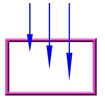


 Greek


Project Background
A plant assembling small and mid size display modules — touch panels laminated to LCD and OLED panels with optically clear adhesive — ran its lamination cure on a mercury arc conveyor inherited from an older coating line. The conveyor was built for flat ink drying, not for optical bonding, and the mismatch showed up in yield.
Mercury output drifted as the tube aged, so dose across the panel width was uneven, and the edges of larger panels cured differently from the centre. Radiant heat from the arc head also pushed polariser film and the thin glass of the modules, producing edge lift after lamination. Every product changeover meant a warm-up cycle and a fresh lamp setting, which is expensive when a line runs four panel sizes in a shift.
What the Plant Needed
- Uniform dose across the panel. OCA cure has to be even edge to edge, not just at the centre of the belt.
- Low heat at the substrate. Polariser film and thin glass cannot take the radiant load of a mercury head.
- Instant start and stop. Mixed size runs mean frequent stops; warm-up time is lost capacity.
- Stable output across a shift. Dose has to be repeatable without re-baselining between batches.
- No mercury handling. Bulb replacement and disposal documentation had become a compliance burden.
The Equipment Supplied
We supplied a 1500W water cooled UV LED curing conveyor, model CG-GHL-W400-360*27-A/C, with the emitting window sized to the widest module the line runs. The lamp body is aluminium with a quartz lens, and the head is chilled by a separate water chiller so the LED junction temperature stays stable through a full shift.
| Parameter | Specification |
|---|---|
| Model | CG-GHL-W400-360*27-A/C |
| Power | 1500W |
| Wavelength | 365 / 385 / 395 / 405nm |
| UV intensity | 18W/cm² |
| Dimmable range | 0–100 percent |
| Cooling | Water cooling with chiller |
| Input voltage | AC85–265V |
| Best emitting distance | 30–50mm |
| Chip brand | LG / Seoul |
| Lamp material | Aluminium body, quartz lens |
| Emitting window | Customised to module width |
| Lifespan | 20,000 hours |
| Warranty | 2 years (chiller and power supply) |
How the Line Was Rebuilt
The mercury head and its warm-up logic were removed. The LED head was mounted at a fixed 40mm working distance inside the 30–50mm band, and the chiller was placed at the end of the line, outside the clean zone. Belt speed was mapped once per module size against the target OCA dose, and the 0–100 percent dimmer was fixed for each product family.
Because the source starts instantly, the line now cures on demand: panels enter the belt as they come off the lamination station rather than waiting for the lamp to reach working temperature. Changeovers became a recipe selection — module width to belt speed to intensity — instead of a lamp adjustment procedure.
Results
- Even cure across the panel. LED output with a quartz lens holds intensity across the emitting window far more evenly than an aged mercury tube, which removed the centre-to-edge dose difference that had been driving edge lift.
- Polariser and thin glass survive. Water cooling keeps the head cool and delivers energy at the panel instead of heating the belt, so heat-related rejects on thin modules fell.
- Warm-up eliminated. Runs start immediately, so four size changeovers in a shift no longer consume the capacity that the mercury line lost to warm-up.
- Energy use down. The line now runs a 1500W LED head; as a working rule, 1000W of LED UV matches roughly 6000W of mercury drying effect, so rated draw fell well below the previous system.
- Repeatable dose. Stable LED output and a chilled head keep the dose consistent from the first panel of a batch to the last, removing the drift that had forced periodic re-baselining.
- No mercury, no ozone. No bulb consumable, no disposal paperwork, no ozone or VOC discharge from the source.
Why a Conveyor Fits Display Bonding
OCA lamination cures a full panel surface, not a point. A conveyor applies a uniform band of energy across the whole module in one pass, which is the natural geometry for flat panel bonding. Where the cure must be confined to a seam or edge seal, a spot head remains the better tool.
Selection Notes for Display Assembly
Three parameters carry most of the decision. Wavelength first: 365nm for OCA and optical adhesive systems, 395nm and 405nm where the adhesive is filled or the coating is pigmented. Emitting window second: size it to the widest module on the line, not the average, otherwise large panels get edge under-cure. Cooling third: a 1500W head in a cleanroom needs water cooling with a chiller to avoid dumping heat into the enclosure.
This configuration is delivered in 10–15 working days from order in a wooden case, minimum order one set, payment by T/T or L/C.